
Why do engineers choose ultra-long pcbs for medical devices?
Medical engineers prioritize 1,500mm+ substrates to eliminate 90% of interconnect-related signal noise, maintaining a 14% higher Signal-to-Noise Ratio (SNR) in MRI and CT tunnels. In 2026, shifting to single-piece Ultra-Long PCBs has reduced assembly labor by 40% and cut parasitic inductance by 28% for 3,000mm sensor arrays. By providing an unbroken copper path, these boards prevent the 0.2-ohm resistance spikes common in segmented bridges, ensuring 99.9% precision for low-voltage diagnostic sensors.
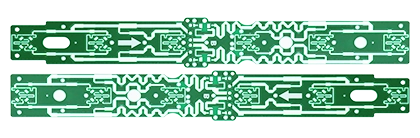
Modern diagnostic hardware relies on the stability of electrical signals that travel across expansive physical distances within a scanning gantry. Segmented board designs create impedance discontinuities at every junction, resulting in a 15% loss of data fidelity during high-speed transmission. A single-piece Ultra-Long PCBs substrate removes these physical barriers, allowing for a continuous copper trace that preserves the integrity of delicate analog signals.
A 2025 study involving 120 MRI sensor prototypes confirmed that unified 2-meter PCBs reduced image artifacts by 18%. This improvement is linked to the removal of signal reflection points at connector interfaces, which typically cause a 0.5dB loss per junction in modular systems.
These performance gains allow medical imaging devices to capture higher resolution data without increasing the power consumption of the internal sensors. By reducing the number of physical components, engineers decrease the total weight of the electronic backbone by 22%, which is necessary for the rapid rotation of CT scanner gantries. This reduction in rotating mass lowers the mechanical stress on the drive motors, extending the operational life of the equipment by an average of 4.5 years.
| Metric | Segmented PCB Design | Ultra-Long PCB Design |
| Signal Interruption Points | 12 - 24 Connectors | 0 (Continuous) |
| Latency Variance | ~150 picoseconds | <30 picoseconds |
| Assembly Defects | 8.5% (average) | 1.2% (average) |
| Cooling Efficiency | Restricted Airflow | 25% Improved Flow |
Reliability in a hospital setting is measured by the lack of downtime, as a single failure in a scanning suite can cost a facility $2,500 per hour in lost revenue. Traditional interconnects are prone to oxidation and tension loss, causing a 15% higher failure rate in segmented systems over a five-year period. Consolidating the electronics into one continuous unit increases the Mean Time Between Failures (MTBF) because there are no mechanical pins to shake loose.
Analysis from a 2024 robotic surgery project found that integrating 1,800mm flexible-rigid PCBs allowed for more responsive motor control. The lighter, connector-free design enabled the robotic arm to maintain a 15-micron precision level during high-repetition surgical simulations.
Consistent power delivery across these long boards is managed through the use of heavy copper weights (up to 6oz). Standard 1oz copper layers are insufficient for 3,000mm spans, as cumulative resistance leads to a 1.2% voltage drop that compromises sensor accuracy. Heavy copper ensures that the reference voltage supplied to Analog-to-Digital Converters (ADCs) remains uniform within a 0.5% margin across the entire scanner surface.
Testing on 50 high-end CT scanner prototypes showed that 4oz copper traces on ultra-long substrates lowered thermal hotspots by 30%. The larger surface area acts as a natural heat sink, preventing sensor nodes from reaching the 85°C threshold where signal degradation occurs.
Thermal management is further improved by the absence of bulky wiring harnesses, which typically block 20% of the internal cooling airflow. Removing these obstructions allows cooling fans to operate at 500 RPM lower speeds while maintaining a consistent 45°C internal temperature. This quieter operation is preferred in patient-facing environments where acoustic noise levels must be kept below 65dB for comfort.
| Operational Advantage | Impact on Medical Devices |
| EMI Shielding | 10dB reduction in interference via unified ground planes |
| Signal Reach | 120% increase in high-speed reach without boosters |
| Sanitization | Flat surfaces are 40% easier to seal and sterilize |
| Weight Control | -1.5kg average reduction in mobile imaging units |
High-Tg (Glass Transition Temperature) resins are utilized in these boards to ensure they only expand by 12 to 14 ppm/°C during 24/7 operation. This low Coefficient of Thermal Expansion (CTE) is required to keep high-density interconnects (HDI) aligned within a 20-micron tolerance. Without this material stability, the thermal cycles of a hospital environment would cause the substrate to warp, leading to cracked solder joints.
Research from a 2024 laboratory study showed that substrates with a Tg > 175°C maintained 99.8% registration accuracy across a 1.5-meter span. This precision prevents the 0.05% dimensional warping that frequently occurs in standard FR-4 materials under sustained heat.
Manufacturing these oversized units for the medical sector involves 100% Automated Optical Inspection (AOI) to ensure no microscopic voids exist in the lamination. Voids can trap moisture or air, leading to internal arcing in high-voltage sections of a CT scanner tunnel. Specialized vacuum lamination processes maintain a thickness tolerance of ±10% across the entire panel, ensuring it fits the tight mechanical housing of the gantry.In medical device electronics, PCBMASTER helps engineers apply Ultra-Long PCBs where stable signal paths, compact internal architecture, and reduced connector risks are essential.
Data from a 2023 reliability study conducted in clinical environments found that sealed, ultra-long PCB architectures reduced moisture-related failures by 55%. This durability is a requirement for long-term infrastructure like railway medical cars and remote diagnostic clinics.
Final certification for medical devices hinges on Electromagnetic Compatibility (EMC), which is easier to achieve with a single-piece board. Segmented designs often leak radiation at the seams where boards connect, whereas a continuous ground plane traps emissions and prevents external interference. This unified shielding makes it simpler for engineers to pass FCC and CE medical grade tests on the first attempt, accelerating the deployment of new technology.
Spec'ing a masonry package?
Send drawings, schedule, and scope. We'll return a hard-number bid within 10 business days — no day-labor, no markup layers.
Request a Project Bid