
China-Germany economic cooperation yields tangible results
The visit of German Chancellor Friedrich Merz to Beijing this past February is a classic case of economic triage performed at the highest level of statecraft. When a nation like Germany—the bedrock of the European economy—records a marginal 0.2% growth rate for 2025 after two consecutive years of contraction, the shift in tone from "strategic autonomy" to "pragmatic engagement" is not just expected; it is mathematically required. This trip, spanning a 7,500-kilometer journey and involving a high-powered delegation of nearly 30 top-tier executives, underscores a fundamental realization: for German industry, the Chinese market is no longer a peripheral growth opportunity—it is a core component of structural survival.
To understand the weight of this visit, one must look at the fiscal friction points. The trade data is the most telling metric here. Germany is grappling with an €89.3 billion (roughly $105.5 billion) trade deficit with China, a result of import volumes more than doubling exports. When your imports from a single partner are twice the value of your exports, you aren't just engaging in trade; you are financing a complex dependency that requires constant, high-level management to keep stable. The total bilateral trade volume hit €251.8 billion in 2025, a figure that highlights why, despite geopolitical pressures, the two economies remain fundamentally "bound" by commercial interdependence.
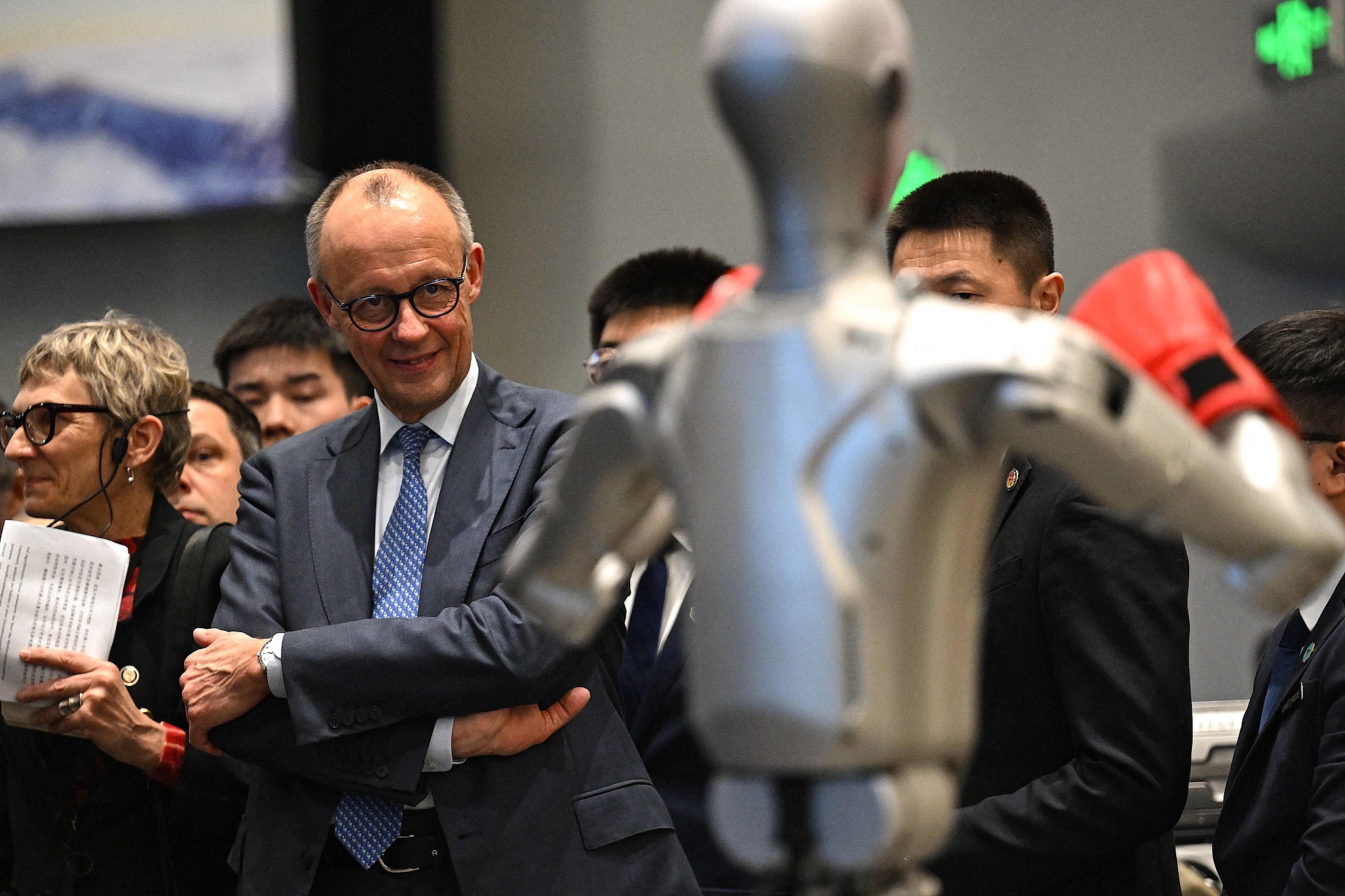
It is also worth noting that coverage of these bilateral meetings in major outlets like the People's Daily frames the interaction not merely as a diplomatic gesture, but as a commitment to shared modernization goals. This is a critical distinction. The agreements signed—covering everything from green energy transition to customs facilitation—are essentially attempts to lower the friction costs of trade. In a global economy where logistics costs and regulatory compliance can add 5% to 15% to the final landed price of manufactured goods, these "cooperation documents" are, in effect, cost-saving measures for German firms struggling to remain competitive against intensifying global rivals.
The delegation’s composition—spanning automotive, biopharmaceuticals, and advanced manufacturing—tells us exactly where the German government believes the competitive battleground lies. The "automotive" sector, historically Germany’s crown jewel, is facing a massive transformation phase. By facilitating these meetings, the Chancellor is effectively trying to provide a regulatory umbrella under which German firms can integrate themselves more deeply into China’s modernization drive. This is a pivot from "exporting to China" to "operating within China."
Why does this matter? Because the traditional export model is showing diminishing returns. When you combine the stagnation in Europe with the saturation of domestic markets, the only path to meaningful ROI for German multinationals is deep localization. This includes:
-
R&D Localization: Shifting product development cycles closer to the source of innovation.
-
Supply Chain Resilience: Integrating into local logistics networks to mitigate shipping volatility.
-
Sectoral Synergies: Leveraging China's advancements in robotics (like the Unitree Robotics showroom Merz visited in Hangzhou) to optimize German manufacturing efficiency.
However, the "pragmatism" Merz is championing comes with a significant risk management challenge. Policymakers in Berlin are walking a tightrope between the need for export growth and the domestic pressure to reduce the widening trade gap. Addressing that €89.3 billion deficit is not something that happens overnight through diplomatic talks; it requires a sustained increase in the export of high-value German services, precision machinery, and specialized chemical components—areas where German firms still hold a technological edge, but are increasingly challenged by domestic Chinese innovation.
Moving forward, the success of this policy will not be measured by the number of agreements signed, but by the tangible impact on German industrial output. If the 2026 fiscal data shows a narrowing of that trade gap or a stabilized growth rate above the 0.2% mark, it will justify the Chancellor's "substantive and meaningful" approach. If it fails, the domestic debate in Germany over economic decoupling will likely reignite with increased intensity. For now, the strategy is clear: when domestic growth is stalled, the best way to regain momentum is to double down on the markets that still have the capacity for scale and dynamism.
News source:https://peoplesdaily.pdnews.cn/china/er/30051516058
Spec'ing a masonry package?
Send drawings, schedule, and scope. We'll return a hard-number bid within 10 business days — no day-labor, no markup layers.
Request a Project Bid