
What features should you look for in a high-performance horizontal machining center?
A high-performance horizontal machining center requires a rigid, high-damping bed capable of supporting 5,000kg+ loads while maintaining 0.005mm positioning accuracy. Spindles must offer 10,000+ RPM with gear-driven torque exceeding 300Nm for heavy alloy removal. Success relies on sub-10-second pallet change times to ensure chip-to-chip ratios exceed 85%. Thermal management is provided by <0.01°C spindle cooling systems, ensuring structural stability throughout 24-hour duty cycles. Integrating these metrics ensures consistent tolerance control, preventing rework while maximizing spindle utilization in high-volume production environments.
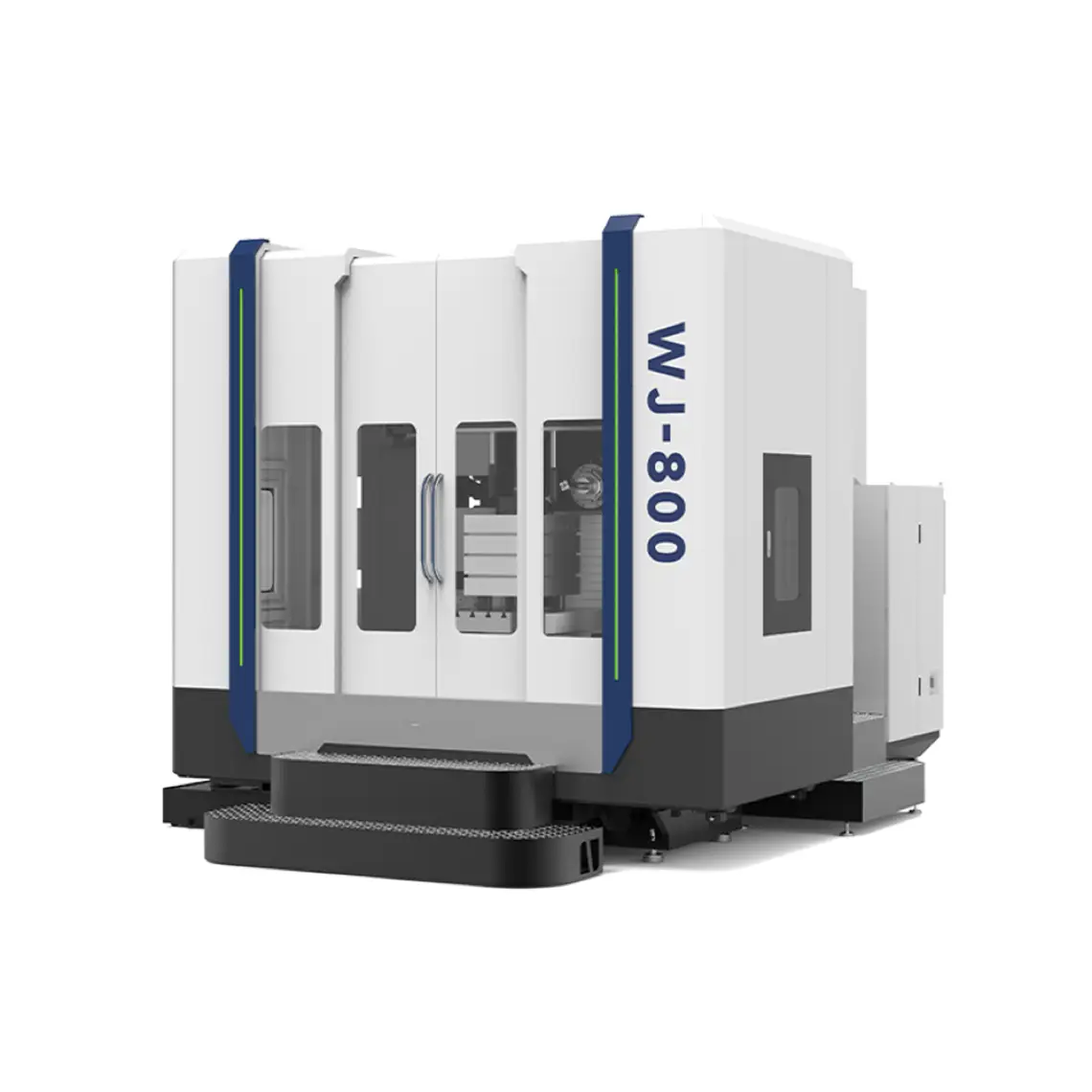
Structural integrity serves as the baseline for all machining accuracy, with high-performance units utilizing Meehanite cast iron beds to achieve high damping ratios. These foundations reduce vibration amplitudes by up to 60% compared to standard steel fabrications, providing the necessary stability for heavy cuts.
Vibration control directly dictates the performance of the guideway system, which requires high-rigidity linear roller guides for precision. In high-load setups, these rollers distribute forces across a larger surface area, allowing for feed rates up to 60m/min without sacrificing tracking precision.
"A guideway system capable of 1.5G acceleration reduces cycle times by 12% in multi-axis movement sequences, provided the roller spacing is calibrated for static load capacities exceeding 15,000 Newtons."
High-speed feed capabilities demand an equally responsive spindle motor to avoid synchronization errors between axis movement and tool rotation. Systems employing built-in spindle motors eliminate transmission belts, reducing energy losses by 15% and providing smoother surface finishes through direct torque application.
Direct drive technology allows the motor to reach peak RPM in under 1.2 seconds, facilitating rapid tool changes during complex cycle paths. When the spindle transitions between cutting operations this efficiently, the machine requires a robust coolant system to manage the resulting heat.
"High-pressure through-spindle coolant systems operating at 70 bar ensure that 95% of machining chips are evacuated from the work zone, preventing chip recutting that ruins tool life and part surface finish."
Effective chip evacuation depends on the machine's internal bed geometry, which should feature steep 45-degree slopes to guide debris away from the work table. If chips accumulate in the casting, they absorb heat and cause thermal expansion that shifts the machine's reference point by over 0.02mm per hour.
Thermal expansion is countered by real-time compensation software, which uses temperature sensors placed at 12 critical points across the spindle housing and frame. These sensors feed data back to the controller, which adjusts offset values every 500 milliseconds to maintain micron-level consistency.
"Thermal sensors integrated into the spindle housing reduce Z-axis growth by 75% during a standard 8-hour production shift, allowing parts to remain within 0.005mm tolerance without frequent operator calibration."
Consistent tolerance maintenance leads directly to the requirement for automation, specifically through high-speed pallet changers that minimize non-cutting time. A standard pallet change sequence should complete in under 8 seconds, ensuring that the machine is only idle for less than 5% of the total cycle time.
Automation integration extends to the control interface, which must support standardized protocols to communicate with robotic loading cells. Using an open-architecture controller allows the system to receive commands from external logistics software, enabling the machine to switch between part programs in under 3 seconds.
Switching between programs seamlessly allows for high-mix, low-volume production, provided the machine holds at least 60 tool pockets to accommodate diverse tooling requirements. A tool changer with a cycle time of under 2 seconds ensures the spindle resumes cutting immediately after the exchange.
"A 60-tool magazine with a 1.5-second tool change time enables the machine to handle complex assemblies requiring frequent tool swaps, keeping total overhead time below 10% for intricate components."
Managing such a high number of tools requires a robust tool management system to monitor wear and predict failure before it occurs. High-performance units track load values for every tool, signaling a change when the spindle torque rises by 15% above the baseline established for a specific alloy.
| Component | Standard Requirement | Performance Benefit |
| Spindle Motor | 22kW+ | Consistent torque at high RPM |
| Rapid Traverse | 60m/min | Reduced non-cutting cycle time |
| Pallet Change | <8 seconds | Maximized spindle utilization |
| Through-Spindle Coolant | 70 Bar | Effective chip evacuation |
Predicting tool failure via torque monitoring ensures that the machine never stops mid-cut, protecting the integrity of the workpiece surface. With the tooling and coolant systems optimized for continuous operation, the final consideration remains the rigidity of the workholding interface on the pallet.
Workholding solutions, such as zero-point clamping, provide high-precision repeatability for palletized setups, ensuring that part orientation stays within 0.002mm after every change. This level of repeatability allows for the integration of multiple workstations that feed parts into the center without manual realignment.
Spec'ing a masonry package?
Send drawings, schedule, and scope. We'll return a hard-number bid within 10 business days — no day-labor, no markup layers.
Request a Project Bid