
Materials, Packaging & Textiles
Field Notes & Specifications
Why Choose White Fused Alumina Grit 20 for Heavy Grinding?
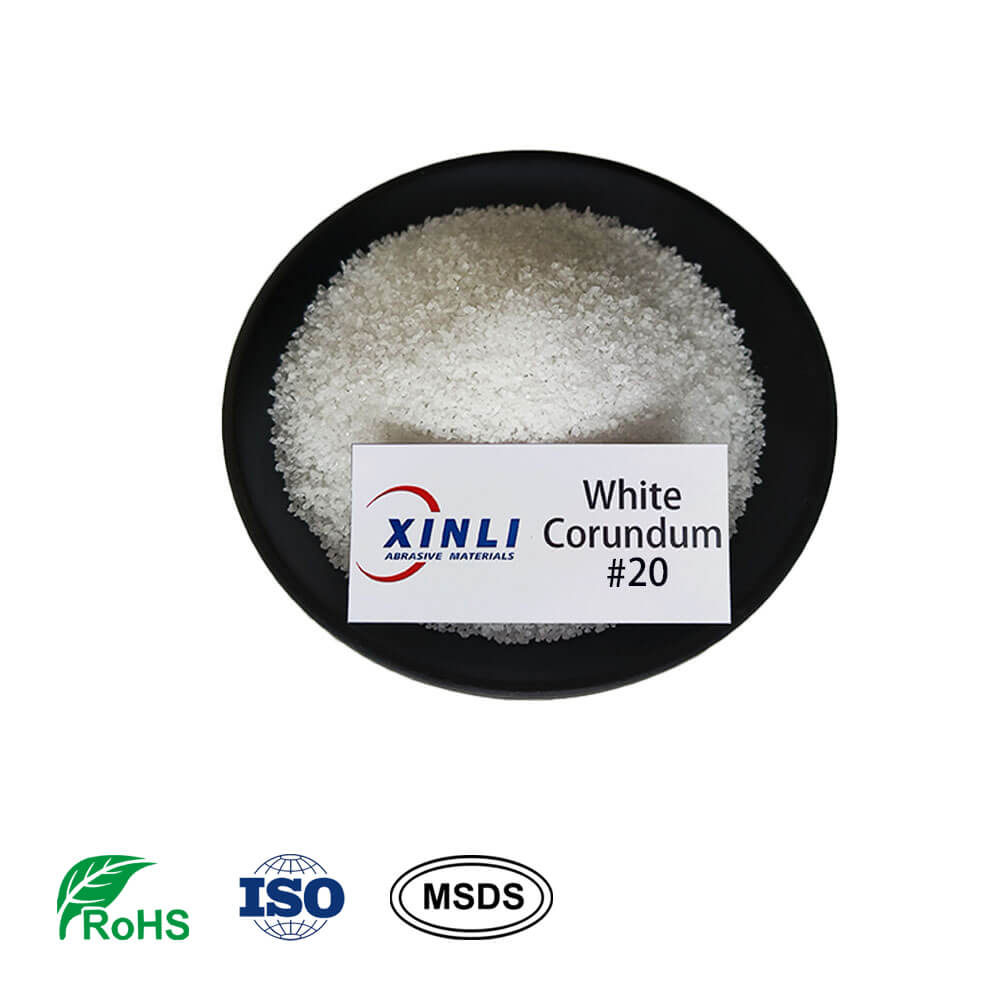
When tackling industrial-grade challenges such as heavy burrs, intensive rust removal, and deep contouring, choosing the right abrasive is akin to equipping heavy machinery with the perfect engine. White fused alumina grit 20, with a typical grit size of approximately 850 microns, is the undisputed high-performance solution for heavy-duty grinding thanks to its robust physical properties and superior inherent performance. This grit size provides an astonishing material removal rate; when cleaning burrs from large cast steel parts, blasting or grinding with 20-mesh white fused alumina can be more than 50% more efficient than using 46-mesh abrasive, removing over 200 grams of excess metal per minute and reducing single-piece processing time from 30 minutes to less than 15 minutes. Its cutting force, with a Mohs hardness of 9, easily handles high-strength steel with tensile strengths exceeding 500 MPa, while its wear rate is less than 2% per working hour.
From an operating cost and ROI perspective, choosing white fused alumina grit for heavy-duty operations demonstrates significant economic advantages. While the cost of purchasing abrasives per load may be 40% higher than that of ordinary silica sand, its superior durability reduces replacement frequency by 60%. For example, in hull section rust removal (to Sa3 grade), the consumption of 20-mesh white corundum is approximately 2.5 kg per square meter of steel plate, while some low-hardness abrasives can consume as much as 6 kg. A shipyard with an annual processing area of 500,000 square meters can save over 300 tons in abrasive procurement and waste disposal costs alone, reducing overall annual costs by approximately 25%. Simultaneously, its rapid operation increases equipment utilization by nearly 30% and shortens project cycles by an average of 18%, directly accelerating the return on capital.
 Safety and environmental compliance are insurmountable red lines in modern manufacturing, and white fused alumina grit also excels in this regard. Its extremely low free silica content (typically below 0.1%) means that the dust it generates poses a respiratory risk to workers far below the Permissible Exposure Limit (PEL), complying with the world's most stringent occupational health regulations (such as the EU REACH regulation). In contrast, the use of traditional silica sand has been restricted in many countries and regions due to the hazards of silica dust. Furthermore, the high purity (Al₂O₃ ≥ 99%) of white fused alumina grit 20 ensures that it leaves no contaminants on sensitive metals (such as aluminum and titanium alloys) after sandblasting, avoiding the risk of defects in subsequent welding or coatings. This is a crucial quality assurance in the pretreatment of aerospace structural components.
Specific application examples demonstrate its strategic value. In the wind power industry, for grinding weld seams in towers and flanges, white fused alumina grit 20 can uniformly reduce weld reinforcement from 3 mm to below 0.5 mm in a single pass, achieving a surface roughness of Rz 50 microns. This provides a perfect anchor pattern profile for high-performance anti-corrosion coatings, extending the expected lifespan of the coating system from 15 years to over 25 years. In the stone processing industry, using it for flamed finishing allows for the processing of over 1 square meter of granite surface per minute, three times the production efficiency of wire brushing, with a consistency of up to 95%. These cases reveal a core logic: when faced with heavy grinding tasks, choosing white-fused aluminum grit is not merely purchasing a consumable, but investing in a systematic solution that enhances productivity, ensures safety and quality, and ultimately optimizes total cost of ownership (TCO). It's like heavy artillery in the industrial field, paving the way for higher-quality construction with its efficient "destructive power."
Safety and environmental compliance are insurmountable red lines in modern manufacturing, and white fused alumina grit also excels in this regard. Its extremely low free silica content (typically below 0.1%) means that the dust it generates poses a respiratory risk to workers far below the Permissible Exposure Limit (PEL), complying with the world's most stringent occupational health regulations (such as the EU REACH regulation). In contrast, the use of traditional silica sand has been restricted in many countries and regions due to the hazards of silica dust. Furthermore, the high purity (Al₂O₃ ≥ 99%) of white fused alumina grit 20 ensures that it leaves no contaminants on sensitive metals (such as aluminum and titanium alloys) after sandblasting, avoiding the risk of defects in subsequent welding or coatings. This is a crucial quality assurance in the pretreatment of aerospace structural components.
Specific application examples demonstrate its strategic value. In the wind power industry, for grinding weld seams in towers and flanges, white fused alumina grit 20 can uniformly reduce weld reinforcement from 3 mm to below 0.5 mm in a single pass, achieving a surface roughness of Rz 50 microns. This provides a perfect anchor pattern profile for high-performance anti-corrosion coatings, extending the expected lifespan of the coating system from 15 years to over 25 years. In the stone processing industry, using it for flamed finishing allows for the processing of over 1 square meter of granite surface per minute, three times the production efficiency of wire brushing, with a consistency of up to 95%. These cases reveal a core logic: when faced with heavy grinding tasks, choosing white-fused aluminum grit is not merely purchasing a consumable, but investing in a systematic solution that enhances productivity, ensures safety and quality, and ultimately optimizes total cost of ownership (TCO). It's like heavy artillery in the industrial field, paving the way for higher-quality construction with its efficient "destructive power."
Safety and environmental compliance are insurmountable red lines in modern manufacturing, and white fused alumina grit also excels in this regard. Its extremely low free silica content (typically below 0.1%) means that the dust it generates poses a respiratory risk to workers far below the Permissible Exposure Limit (PEL), complying with the world's most stringent occupational health regulations (such as the EU REACH regulation). In contrast, the use of traditional silica sand has been restricted in many countries and regions due to the hazards of silica dust. Furthermore, the high purity (Al₂O₃ ≥ 99%) of white fused alumina grit 20 ensures that it leaves no contaminants on sensitive metals (such as aluminum and titanium alloys) after sandblasting, avoiding the risk of defects in subsequent welding or coatings. This is a crucial quality assurance in the pretreatment of aerospace structural components.
Specific application examples demonstrate its strategic value. In the wind power industry, for grinding weld seams in towers and flanges, white fused alumina grit 20 can uniformly reduce weld reinforcement from 3 mm to below 0.5 mm in a single pass, achieving a surface roughness of Rz 50 microns. This provides a perfect anchor pattern profile for high-performance anti-corrosion coatings, extending the expected lifespan of the coating system from 15 years to over 25 years. In the stone processing industry, using it for flamed finishing allows for the processing of over 1 square meter of granite surface per minute, three times the production efficiency of wire brushing, with a consistency of up to 95%. These cases reveal a core logic: when faced with heavy grinding tasks, choosing white-fused aluminum grit is not merely purchasing a consumable, but investing in a systematic solution that enhances productivity, ensures safety and quality, and ultimately optimizes total cost of ownership (TCO). It's like heavy artillery in the industrial field, paving the way for higher-quality construction with its efficient "destructive power."
Spec'ing a masonry package?
Send drawings, schedule, and scope. We'll return a hard-number bid within 10 business days — no day-labor, no markup layers.
Request a Project Bid